 BFF Academy · Elite course
 Quick start: Your first session
Reach and drop, and what you can change
The app classifies your upper body rather than giving you a distance to hit, so this last one follows what you feel on the bike. If you do want the numbers, they are in Bike Measurements, and these are the two the app uses.
Saddle to Hoods is the straight line from the tip of your saddle to the hoods. Because it is a straight line rather than a flat one, it changes when your bars move up or down as well as in or out. Saddle / Handlebars is the distance from the top of your handlebars to the top of your saddle. You may know that one as grip drop.
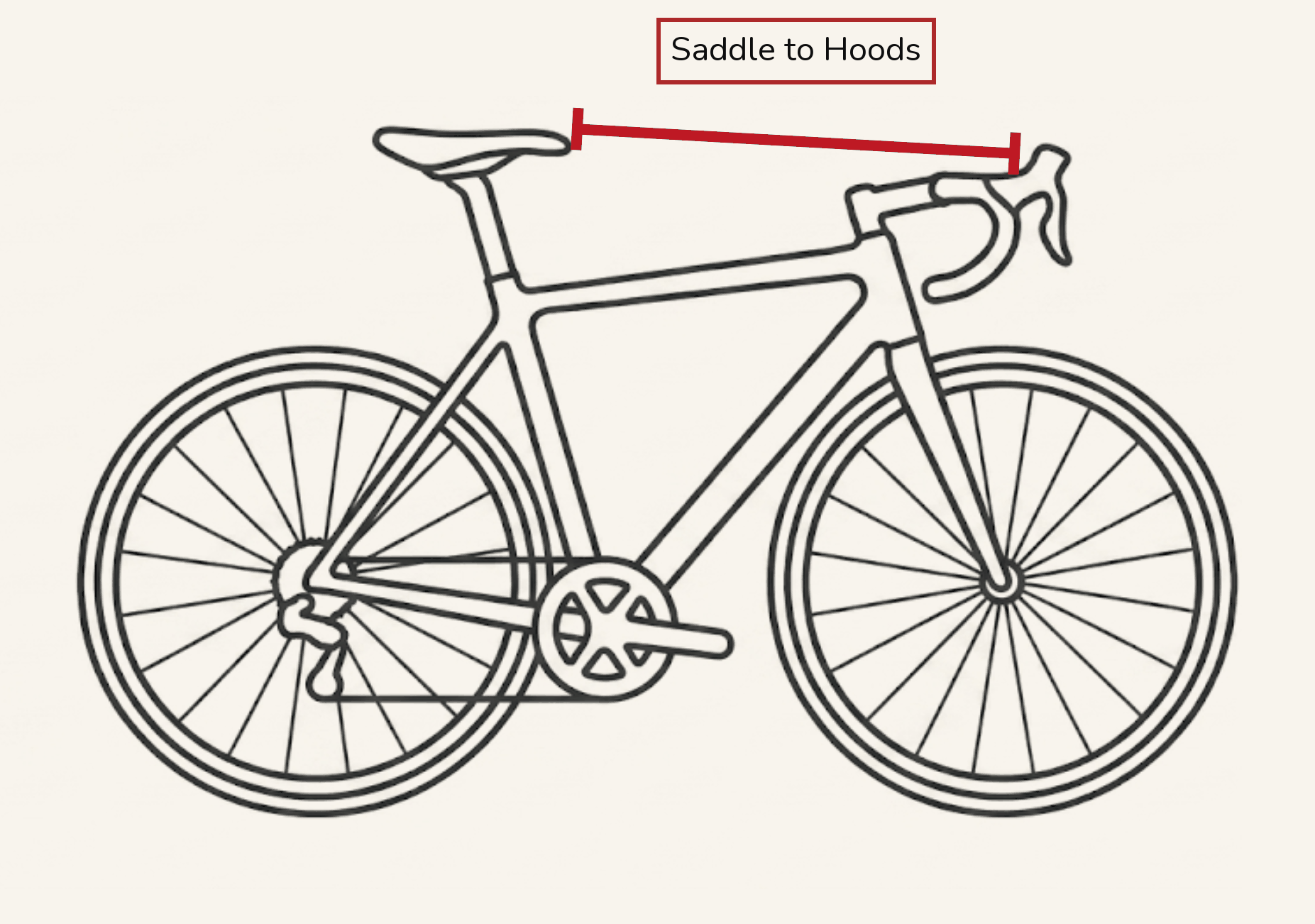
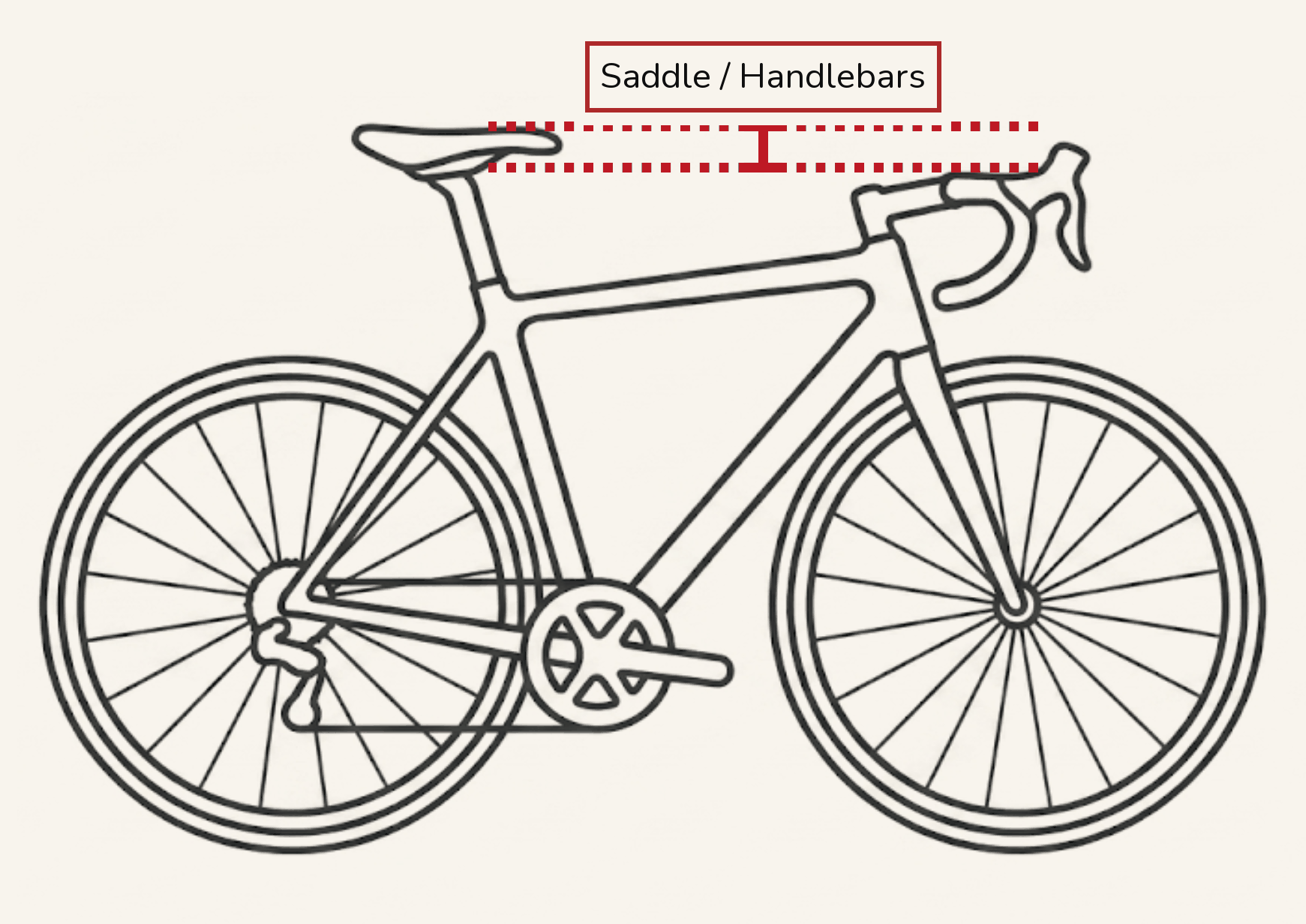
These describe the shape you ride in; they are not targets to hit. They also won't necessarily compare against numbers you find elsewhere, because published figures are measured in their own ways and the hoods can sit above or below the bar top.
| What you feel | What it usually means | What moves it |
|---|---|---|
| Stretched out. Weight on your hands, shoulders creeping forward, you slide back on the saddle to cope | Reach is too long | A shorter stem is the real lever. A stem flipped to a positive angle shortens reach too, because tilting it up pulls the bars back as it lifts them |
| Cramped. Knees crowding your elbows, hard to breathe deeply, you sit on the nose of the saddle | Reach is too short | A longer stem, or a stem flipped down, which pushes the bars away as it lowers them |
| Bars too low. Neck and lower back sore on long rides, you ride on the tops rather than the hoods | Drop is too large | Spacers under the stem. They raise the bars and bring them slightly closer at the same time, because the head tube is angled |
| Bars too high. Position feels upright and slow, you find yourself reaching down for the drops constantly | Drop is too small | Fewer spacers. They lower the bars and push them slightly further away, the inverse of adding them. A stem flipped down does the same thing more strongly |
Rotating the bar in the stem clamp is the fine adjustment, once the rest is settled. It moves the hoods a small amount in both directions at once.
None of this is work to do yourself in the middle of a session. A stem swap or a spacer change is about ten minutes for a mechanic, and the front end of a bike is the part where torque settings matter, so it is worth having it fitted by someone with a torque wrench rather than learning on your own unless you have prior experience.